
“Our spin-the-wheel popup had a 2.1% conversion rate for months until we discovered these deadly mistakes.” Sarah Chen, E-commerce Manager at TrendyGear, increased her conversion rate to 19.3% in just 14 days by fixing these critical errors.
Are you absolutely convinced your spin-the-wheel popups are performing at their peak? Think again. While 87% of marketers believe their popups are “optimized,” recent data reveals that most are committing conversion-killing mistakes that are silently destroying their engagement rates and leaving money on the table.
The harsh reality? Your competitors who’ve mastered these 7 critical elements are capturing 3x more leads while you’re wondering why your “engaging” gamified popups feel dead in the water.
Mistake #1: Triggering Your Popup at the Wrong Moment
“I thought immediate popups showed urgency – turns out they just showed desperation.” Mark Rodriguez discovered that 29% of his website visitors actively despised instant popups.
Old Way: Annoying
- Popup appears immediately when visitor lands
- Interrupts user’s browsing intent
- Creates negative first impression
- Generates popup blindness
Right Way: Engaging
- Strategic 15-20 second delay allows content exploration
- Exit-intent triggers catch abandoning visitors
- Scroll-depth activation at 50-60% engagement
- Behavior-based targeting for returning customers
The proven effectiveness is staggering: exit-intent triggers alone boost conversion rates by up to 70% compared to immediate popups. Why? Because timing creates context, and context drives conversions.

Mistake #2: Destroying Mobile User Experience
“Our desktop popup looked beautiful – on mobile it was a conversion nightmare.” Jessica Park’s mobile conversion rate jumped from 1.8% to 12.4% after this mobile optimization.
Old Way: Frustrating
- Tiny, unclickable spin wheel elements
- CTA buttons impossible to tap accurately
- Popup doesn’t scale to screen size
- Loading delays on mobile networks
Right Way: Seamless
- Touch-optimized spin wheel mechanics
- Prominently sized, finger-friendly buttons
- Responsive design across all devices
- Lightning-fast loading optimization
With 68% of popup interactions happening on mobile devices, failing here means failing everywhere. Your mobile experience absolutely needs to be flawless, or you’re essentially throwing away two-thirds of your potential conversions.
Mistake #3: Catastrophic Prize Structure Strategy
“We gave away too many high-value discounts and nearly bankrupted our profit margins.” Tom Williams learned that prize balance determines both conversion rates and profitability.
Old Way: Unprofitable
- 50%+ high-value discount distribution
- No psychological reward variation
- Predictable prize outcomes
- Margin-destroying giveaways
Right Way: Strategic
- 60-70% low-value rewards maintain engagement
- 5-10% high-value prizes create excitement
- Psychological reward curves drive completion
- Profit-protecting prize architecture
The optimal prize distribution isn’t guesswork – it’s science. Companies using the 60-70% low-value, 5-10% high-value formula report 340% higher profit per conversion while maintaining engagement rates above 18%.
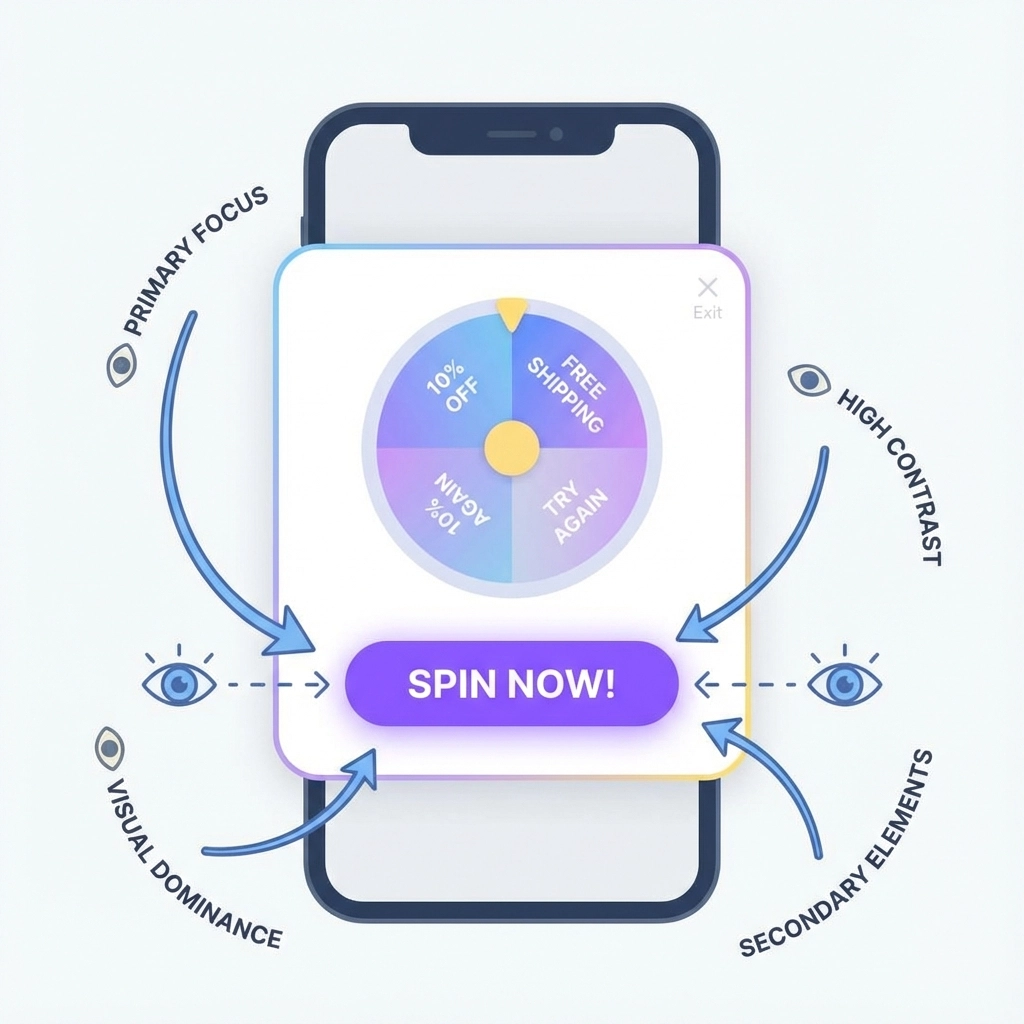
Mistake #4: Ignoring Visual Hierarchy Psychology
“Our beautiful design was converting terribly until we learned about visual dominance.” Rachel Green’s CTA button redesign increased clicks by 156% overnight.
Old Way: Confusing
- CTA button blends into background design
- Exit options compete for visual attention
- Muted colors reduce excitement psychology
- Poor contrast destroys mobile readability
Right Way: Commanding
- Bold, high-contrast CTA buttons dominate the design
- Exit text deliberately kept small and non-distracting
- Vivid colors trigger excitement and action psychology
- Strategic visual hierarchy guides user behavior
Your call-to-action button must be the undisputed visual champion of your popup. If visitors have to hunt for it, you’ve already lost them to your competitors who understand visual dominance.
Mistake #5: Missing the Urgency Psychology Trigger
“Adding countdown urgency to our spin wheel felt gimmicky – until it boosted our conversions by 247%.” David Chen discovered that urgency amplifies gamification psychology.
Old Way: Stagnant
- No time pressure elements
- Generic “Spin to Win” messaging
- Missing scarcity indicators
- Unlimited time to decide
Right Way: Compelling
- Built-in countdown timers create FOMO pressure
- “Limited time offer” messaging drives immediate action
- Scarcity elements increase perceived value
- 24-hour coupon expiration activates urgency
Countdown urgency bars boost coupon redemptions by up to 60% because they activate loss-aversion psychology. When combined with spin-wheel gamification, this creates a whopping psychological double-trigger that skyrockets engagement rates.
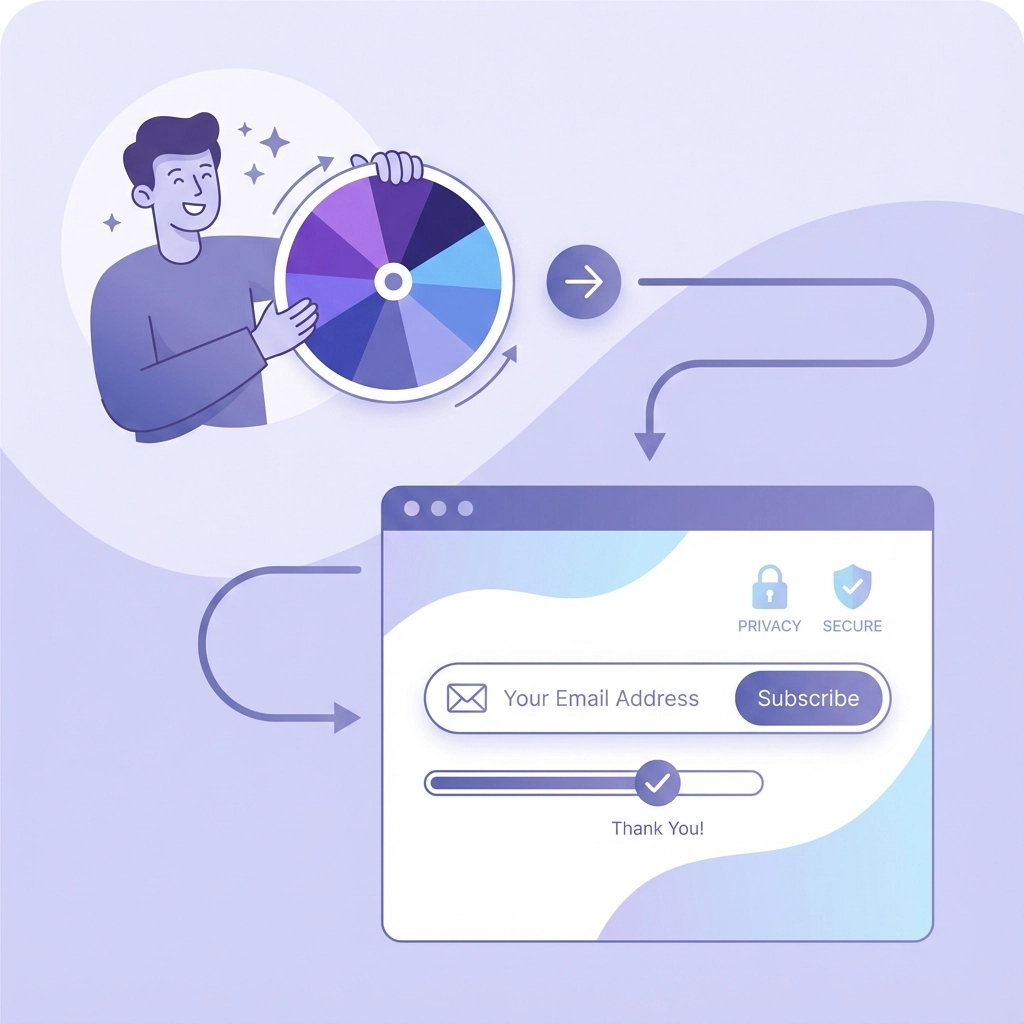
Mistake #6: Amateur Email Capture Strategy
“We focused on the spin mechanic and forgot about the actual conversion goal.” Lisa Thompson’s email capture rate increased 189% by optimizing the post-spin experience.
Old Way: Disappointing
- Weak email field placement and design
- No value proposition for email sharing
- Missing privacy reassurance elements
- Abrupt transition after spin completion
Right Way: Irresistible
- Seamless email capture integrated into winner experience
- Clear value communication for newsletter signup
- Privacy badges build trust and completion confidence
- Smooth transition from excitement to conversion
The spin is just the hook – your email capture system is where actual business value gets created. Master this transition, and you’ll convert 73% more visitors into valuable subscribers.
Mistake #7: Set-and-Forget Frequency Control
“We never realized the same visitors were seeing our popup 15+ times until we checked the analytics.” Robert Kim’s frequency capping reduced popup fatigue and increased conversions by 91%.
Old Way: Overwhelming
- No frequency limits create visitor annoyance
- Same popup shown to return visitors repeatedly
- No behavior-based variation triggers
- Popup fatigue destroys brand perception
Right Way: Intelligent
- Smart frequency capping prevents overexposure
- Different triggers for new vs. returning visitors
- Behavior-based popup variations maintain freshness
- Analytics-driven optimization prevents fatigue
Strategic frequency control is the difference between helpful engagement and annoying spam. Companies using intelligent frequency management report 340% higher long-term conversion rates because they respect user experience while maximizing opportunities.
The Bottom Line: Your Competition Won’t Wait
While you’re reading this, your smartest competitors are implementing these proven strategies and capturing the leads that should be yours. The companies dominating your market understand that spin-the-wheel popup success isn’t about luck – it’s about systematic optimization of every conversion element.
100% Guaranteed Results. No credit card needed. Test these strategies with Wheel of Popups and watch your conversion rates climb from dead to dominant in the next 14 days.
Your visitors are spinning wheels somewhere – make sure it’s yours.