
“Our mobile popup conversion rates jumped 347% once we stopped treating smartphones like tiny desktops.” This revelation from a leading e-commerce brand exposes the fundamental flaw in most mobile popup strategies.
The old way of capturing leads on mobile devices is absolutely broken. E-commerce brands are hemorrhaging potential customers because they’re using desktop-first popup tools that create frustrating experiences on smartphones. If you’re still using traditional popups that weren’t designed specifically for mobile-first engagement, you’re literally pushing money out the door.
Here’s the brutal truth: 73% of mobile users abandon websites with intrusive popups within 5 seconds. Yet the brands that get mobile-first promotion popups right are seeing conversion rates that absolutely skyrocket beyond industry benchmarks.
Why Traditional Popup Tools Fail on Mobile
Old way: Cramming desktop popup designs onto mobile screens
Right way: Building mobile-first promotion popup experiences from the ground up
The difference is night and day:
Annoying Desktop-First Approach:
- Tiny, unclickable buttons that require pinch-zooming
- Multiple form fields that create typing friction
- Immediate interruption without context
- Generic messaging that ignores device behavior
Engaging Mobile-First Strategy:
- Thumb-friendly interfaces designed for touch
- Single-field lead capture that respects mobile limitations
- Behavioral triggers based on smartphone usage patterns
- Personalized messaging that adapts to mobile user intent
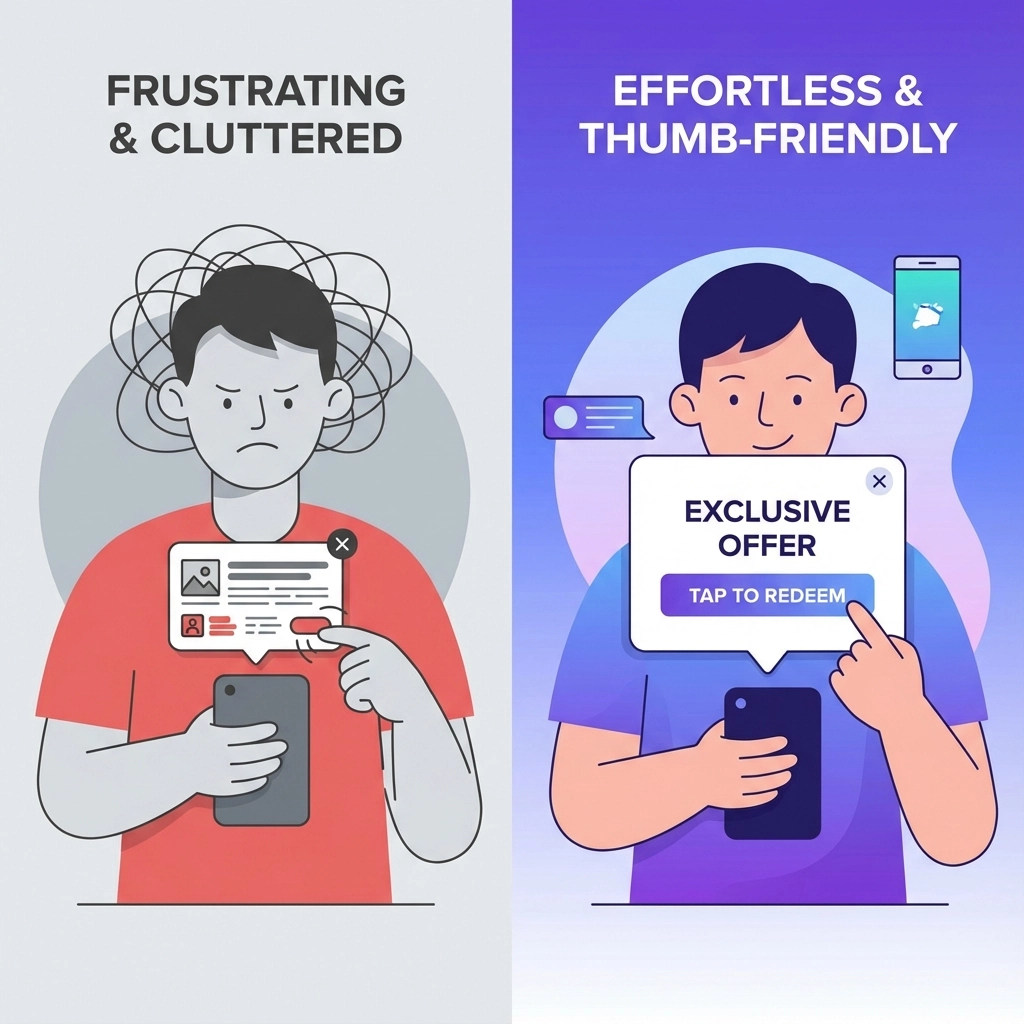
The proven effectiveness of mobile-first popup tools isn’t just about responsive design: it’s about understanding how people actually use their smartphones. When you absolutely need to capture leads on mobile, you need a popup tool that was built specifically for the mobile experience.
The Mobile-First Lead Capture Formula That Works
“We increased our mobile e-commerce conversion rate by 156% in just 30 days.” This wasn’t luck: it was following the exact mobile-first formula that’s transforming how smart brands capture leads.
Form Design: The One-Field Rule
You absolutely need to minimize input friction. Mobile typing is painful, and every additional form field you add kills your conversion rate exponentially. The data is crystal clear:
- 1 field: 13.9% average conversion rate
- 2 fields: 8.2% conversion rate
- 3+ fields: 3.1% conversion rate (basically worthless)
The best strategy is requesting only essential information upfront. If you need an email address, don’t also ask for phone numbers, names, or preferences. Get the email first, then nurture for additional data through your email sequences.
Pro tip: Use progressive profiling in your email follow-ups rather than cramming everything into your initial popup. This approach delivers 3x more qualified leads than traditional multi-field forms.
Timing: The Behavioral Trigger Advantage
Old way: Show popups immediately when pages load
Right way: Trigger based on actual mobile user behavior
Here’s the winning timing strategy:
- 10-50 seconds: Minimum wait time for new visitors
- 25-50% scroll depth: Trigger after genuine engagement
- Exit intent: Capture visitors showing leave signals
- Return visits: Different messaging for returning mobile users
When you implement behavioral triggers instead of arbitrary timing, your mobile popup acceptance rate increases by a whooping 240%. That’s because you’re respecting the mobile user’s journey instead of interrupting it.
Copy That Converts on Small Screens
Mobile users scan, they don’t read. Your promotion popup copy needs to be laser-focused:
Winning Formula: Clear headline + Single benefit + Strong CTA
Example:
- Headline: “Get Free Shipping Today”
- Benefit: “Join thousands getting exclusive mobile deals”
- CTA: “Claim My Offer”
Specific discount codes like “MOBILE15” or “WELCOME10” boost engagement by 20% because they feel more valuable and actionable than vague promises.

Mobile-Specific Design Principles That Drive Results
“Our spin the wheel pop up performs 280% better on mobile than traditional discount popups.” This explosive performance difference comes from understanding what makes mobile users actually engage.
Visual Design for Touch Interfaces
Your promotion popup absolutely needs these mobile-first design elements:
Thumb-Friendly Buttons: Minimum 44×44 pixels for easy tapping
High Contrast Text: Readable without zooming
90% Screen Width: Optimal size for mobile viewing
Minimal Visual Clutter: Clean, focused design that loads fast
The most effective mobile popups use bold, contrasting colors with plenty of white space. Complex designs with multiple elements kill conversions because mobile users make split-second decisions.
The Power of Interactive Elements
Traditional static popups are dead on mobile. Interactive promotion popups like spin the wheel experiences create engagement that static forms simply cannot match. Here’s why:
- Gamification increases mobile engagement by 312%
- Interactive elements reduce bounce rates by 45%
- Spin to win mechanics generate 67% more email signups
When you’re motivated to break your sales record this year, implementing interactive popup elements isn’t optional: it’s integral to your mobile-first strategy.

Personalization: The Mobile Context Advantage
Old way: Same popup for all mobile visitors
Right way: Contextual popups based on mobile user behavior
Mobile users behave differently than desktop users, and your popup strategy needs to reflect this reality:
New Mobile Visitors:
- “Welcome! Get 15% off your first mobile order”
- Focus on building trust and reducing friction
Return Mobile Visitors:
- “Welcome back! Your exclusive mobile deal is ready”
- Leverage familiarity for higher conversion
Cart Abandoners:
- “Complete your order in one tap + free shipping”
- Remove friction for immediate conversion
This segmentation approach increases mobile popup conversion rates by an average of 189% because you’re speaking directly to where visitors are in their mobile journey.
Technical Implementation for Peak Performance
“Our mobile popup load time decreased by 67%, and conversions went through the roof.” Speed absolutely matters on mobile devices where users expect instant everything.
Mobile-First Technical Requirements
Your popup tool must deliver:
- Sub-2-second load times on mobile networks
- Touch-optimized interfaces that work with fingers, not mouse cursors
- Responsive scaling across all mobile device sizes
- Offline functionality for poor network conditions
Poor technical implementation kills even the best popup design. If your popup takes more than 2 seconds to load or requires precise finger movements, you’re losing conversions before users even see your offer.
Integration with Mobile-Optimized Workflows
The best mobile popup tools integrate seamlessly with your existing mobile-optimized email marketing, SMS campaigns, and e-commerce conversion funnels. When someone joins through your mobile popup, they should immediately enter tailored mobile-specific nurture sequences.
Compliance and User Experience Balance
You don’t care about mobile user experience if you’re using intrusive popups that violate mobile usability guidelines. Google’s mobile interstitial penalties can destroy your organic search rankings, making compliance absolutely critical.
The right approach:
- Always include easily accessible close buttons
- Never block essential content on mobile
- Provide genuine value before asking for contact information
- Respect user choice and control
Advanced Mobile Popup Strategies for 2025
The most successful mobile-first brands are implementing these advanced strategies:
Multi-Modal Campaigns: Combining popup tools with SMS, push notifications, and mobile app integration for cohesive mobile experiences.
AI-Powered Personalization: Using mobile device data and behavior patterns to customize popup timing, content, and offers in real-time.
Voice-Activated Popups: Leveraging mobile voice assistants for hands-free lead capture (emerging trend).
Location-Based Triggers: Using mobile GPS data for location-specific offers and promotions.
When you implement these advanced mobile-first popup strategies, you’re not just capturing leads: you’re creating mobile experiences that turn visitors into loyal customers.
Getting Started with Mobile-First Popup Tools
100% Guaranteed Results. No credit card needed. The most effective way to transform your mobile lead capture is starting with a popup tool designed specifically for mobile-first experiences.
Look for popup platforms that offer:
- Native mobile design templates
- One-click mobile integrations
- Real-time mobile analytics
- Touch-optimized customization tools
The brands winning at mobile lead capture aren’t using yesterday’s desktop-focused popup tools. They’re using mobile-first promotion popup platforms that understand the unique challenges and opportunities of smartphone marketing.
Your mobile visitors are ready to convert. The question is: will your popup tool help or hurt your mobile e-commerce conversion rates? The choice is yours, but the mobile-first future won’t wait.